
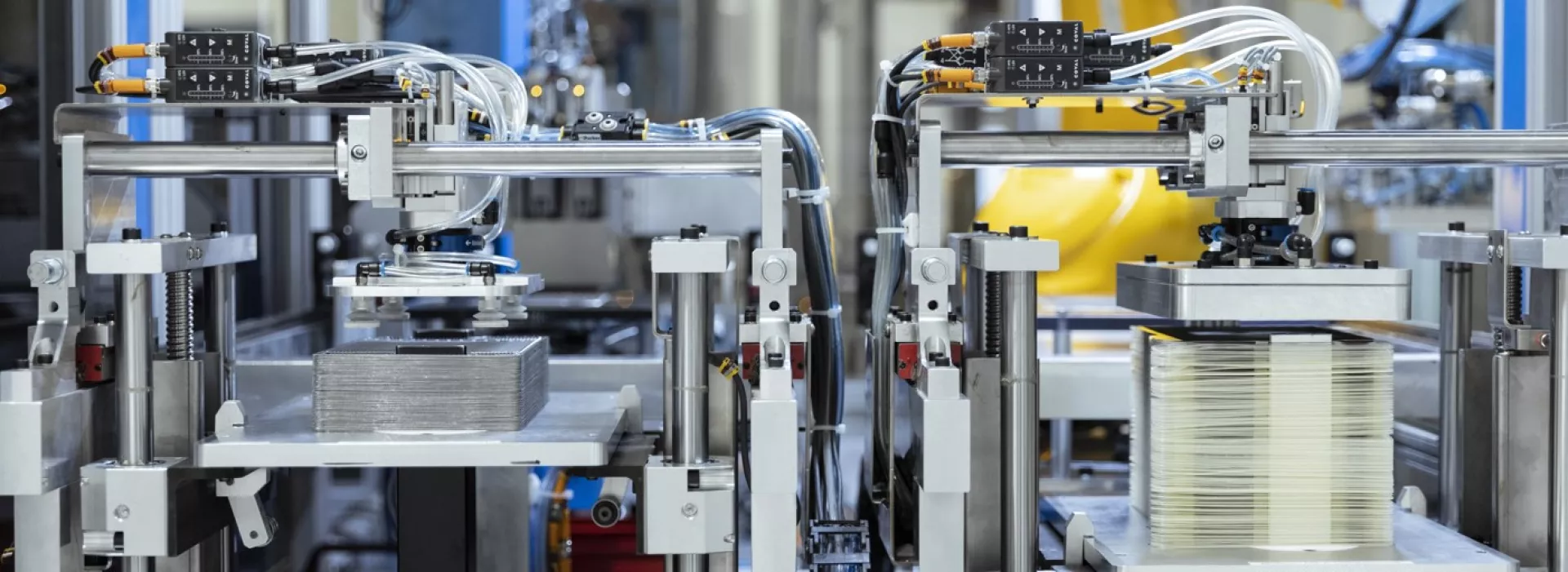
Hydrogen Fuel Cells: An Electric Technology
Hydrogen fuel cells are a clean, flexible technology for powering the most demanding applications.
A hydrogen fuel cell converts hydrogen into electricity through an electrochemical reaction with oxygen. The only emission at the outlet is water vapor—no CO₂, no NOx. This technology is a key solution for the energy transition of intensive applications that require reliable, high-power, low-carbon energy supply across a wide range of uses:
- Heavy-duty mobility: road transport (trucks, buses, coaches) and off-road applications (construction, material handling, rail, maritime)
- Stationary energy: generators supplying power to critical sites, sensitive infrastructure, isolated or off-grid areas (data centers, outdoor events, hospitals, construction sites, etc.)
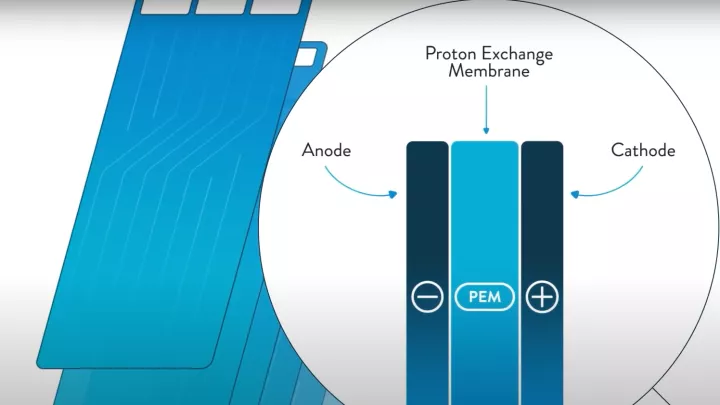
At Symbio, we have chosen PEM (Proton Exchange Membrane) fuel cell technology. Compact, responsive, and capable of delivering high power, PEM technology is particularly suited to environments where continuity of service, reliability, and performance are non-negotiable—such as freight transport, heavy mobility, and critical infrastructure—contexts in which energy can neither fluctuate nor fail.
Key advantages of PEM hydrogen fuel cells:
- Versatile: a high-performance technology for heavy-duty mobility propulsion; its ability to store and deliver energy on demand—whether as a primary or backup power source—also makes it an efficient and sustainable option for power generation.
- Competitive: high energy efficiency helps reduce operating costs.
- Simple: an industrial-scale technology, compatible with transition fuels such as e-methanol.
- Clean: zero CO₂ and NOx emissions, quiet and odorless in use.
Hydrogen fuel cells for heavy-duty mobility
The transition to low-carbon mobility cannot be achieved without solutions capable of handling intensive use: long distances, heavy loads, and continuous operation. Hydrogen fuel cells provide a high-performing, decarbonized solution for trucks, buses, industrial machinery, and off-road applications, without compromising operational efficiency:
- High range compatible with long-distance travel
- Fast refueling times
- Zero emissions, quiet and odorless in use
- Robust and durable
- Consistent performance regardless of operating conditions
Hydrogen fuel cell + battery: high-performance, low-carbon hybridization
The effectiveness of hydrogen solutions also lies in their ability to integrate into hybrid architectures. When combined with a battery, the fuel cell optimizes each phase of operation: the battery handles power peaks and transient phases, while the fuel cell ensures a stable, continuous power supply. This interaction between energy sources achieves an optimal balance between range, efficiency, and durability, adapting precisely to real-world operating cycles.
Hydrogen fuel cells in gensets: supplying intensive, critical, and off-grid applications
In a context where the intermittency of renewable energy creates new challenges, the ability to store and deliver energy becomes a key issue. Hydrogen fuel cells fit precisely into this link between production and consumption. By enabling electricity generation on demand, securing power for sensitive sites, and complementing existing grids, they help strengthen energy resilience across a wide range of applications: data centers, critical infrastructure (hospitals), intensive sites (industrial and commercial facilities), outdoor events (festivals), electric vehicle charging stations, and off-grid areas (construction sites, rural communities).
Applications of hydrogen fuel cell generators (gensets):
- Primary or backup power supply
- Integration into microgrids
- On-demand energy production
- Reduced dependence on fossil fuels
Symbio, your partner in the hydrogen transition
Drawing on our industrial expertise and mastery of the value chain, we support our customers in deploying reliable solutions tailored to their needs, combining operational performance with environmental excellence. In a context of evolving energy uses, our technology stands as a complementary pillar alongside battery solutions and renewable energy. It enables the development of more flexible, resilient systems, fully aligned with carbon neutrality objectives.